
Live Casino Chat Etiquette: Reading the Table Without Losing the Room
There is a quiet superstition that crosses your legs at the table and you might just cross out your luck, but most seasoned players know the real friction at a live table comes from the chat window. When the cards are dealt by a real croupier and the stream runs through a local Geelong broadband node, the text feed becomes its own little ecosystem. I have spent seventeen years editing gambling copy and watching how players behave when the camera is on them, and the habit that separates a pleasant session from a flagged one is almost always the same: treat the chat like a shared space, not a broadcast tower.
Reading the Room Before You Type a Line
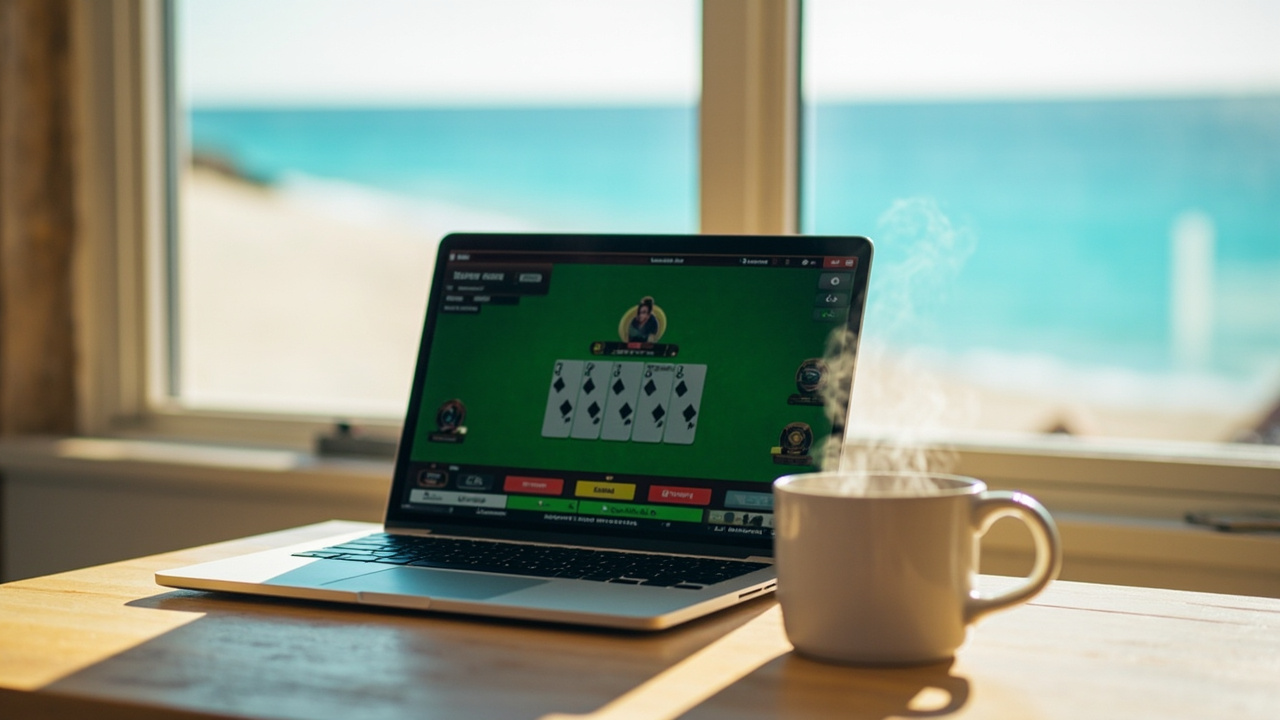
A live casino table is not a private booth, and the person running the shoe has a job that depends on keeping the pace steady for everyone in the stream. Good live casino chat etiquette starts with recognising that the croupier cannot pause the shoe to untangle a paragraph of complaints, and the same restraint applies when you are deciding whether to send a message at all. The best players I have watched over the years tend to reserve the chat for quick confirmations, a polite nod to a clean deal, or a short question that can be answered before the next hand starts. Anything longer than a sentence tends to stack up, and once three people are typing at once the whole table slows down, which is exactly the kind of delay that gets a streamer flagged for pacing problems.
I have edited enough iGaming copy to know that a rushed table is a bad table for the operator and a worse one for the player, so the first rule is simple: keep your messages short and your timing deliberate. If you want to ask about a payout or a rule on the felt, wait for a natural break rather than firing off a question in the middle of a round. The same courtesy applies when someone else in the chat has already asked the same thing, because doubling up on questions is one of the fastest ways to make the whole room feel noisy. A clean table runs on rhythm, and the chat is part of that rhythm, not a side conversation you can drop in whenever you like.
| Detail | Figures |
|---|---|
| Live tables | Baccarat, blackjack, roulette, three card poker |
| Providers on stream | Evolution, Playtech, local white-label feed |
| Currency and limits | AUD, $10 min bet to $5,000 max, $2,000 daily withdrawal ceiling |
| Registration | Email, phone, ID and proof of address, usually under ten minutes |
| Mobile | Same live tables on mobile browser, no app required |
| Support | Live chat and email, Geelong-based team during local hours |
| Loyalty | Points per hand, tiered cashback, no deposit bonus tied to chat activity |
When the Chat Actually Helps and When It Hurts
There are moments when the chat genuinely helps the table, and they are usually the moments when a player has a short, specific question that the croupier can answer without breaking the flow. A quick confirmation on whether a side bet pays before the next round starts is useful, and a polite note when the stream drops for a second is often the fastest way to get the floor team to check the connection. I have seen sessions run smoothly simply because one player kept their messages to two lines and let the dealer keep the shoe moving, which is the kind of restraint that pays off in a room where every second of delay is visible to everyone else.
The flip side is just as plain, and it is where most players who think they are being helpful end up making the table worse. Long explanations of your betting system, repeated questions about the same rule, or messages aimed at other players rather than the croupier all slow the pace and draw attention you probably do not want. Eliza Green, Product Analytics Lead at Banksia Betting Partners, puts it plainly: “Chat volume spikes are one of the clearest signals that a table is losing its rhythm, and the players who keep their messages short are usually the ones who stay in the game longest.” That is not a moral point so much as a practical one, because a table that runs cleanly is a table where the croupier can keep the pace and the floor team can spot genuine problems instead of sorting through noise.
There is also a narrower kind of play where the chat matters less than the maths on the felt, and video poker advantage play is the obvious example. That style of play relies on progressive jackpots and pay tables rather than table conversation, so the player who is tracking a progressive and comparing pay tables is usually better off reading the screen than filling the chat. The chat still has a role, but it is a supporting one, and treating it as the main event is a quick way to lose focus on the part of the table that actually pays.
Fortunately, resources exist to help players identify these lucrative opportunities without needing to engage with the dealer. Visiting https://bonusrocketplay.org/ can streamline the research process for those focused on the numbers. This allows the advantage player to keep their attention firmly on the screen where the real work is being done.
Deposits, Withdrawals and the Handpay Moment
The chat etiquette question does not end when the round finishes, because the same restraint applies when you are moving money in and out of the account. Deposits and withdrawals run through the cashier with their own flow, and the player who keeps the chat clean during a session is usually the same player who keeps the verification paperwork ready before they ever need a handpay. The cashier accepts AUD through the usual local methods, and the limits are set at $10 minimum to $5,000 maximum on the table side, with a $2,000 daily withdrawal ceiling that the floor team enforces before anything leaves the account. None of that is complicated, but it does mean the player who wants a clean payout is the one who has their ID, proof of address and payment details sorted before the session gets busy.
When a win crosses into the handpay range, the floor team verifies a handpay before delivering the winnings in person, and that is the moment where a tidy chat history can actually matter. A player who has been calm, brief and polite in the chat is easier to verify and easier to hand over the payout to than one who has spent the session arguing in the text feed. Jack Foster, Commercial Director at Eucalypt Digital Advisory, is blunt about the commercial side of that: “A clean cashier flow and a clean chat feed are not separate problems, because the same player behaviour that slows a table also slows a withdrawal.” Grace Foster, Risk and Integrity Manager at Banksia Betting Partners, adds the caveat that matters most for anyone chasing a payout: “Verification is not a hurdle you work around, it is the point where the operator confirms the player behind the account is the one who placed the bets.”
None of this is about being stiff for the sake of it, and it is certainly not about treating the chat like a compliance lecture. It is about recognising that a live table is a shared room, and the player who treats the text feed with the same care they would give a conversation in a busy Geelong pub on a Friday arvo is the one who gets the best out of the session. I have edited enough casino copy to know that the players who last are the ones who keep their messages short, their paperwork ready and their expectations grounded, because a clean table and a clean cashier are two sides of the same habit. If you remember that crossing your legs is only a superstition and that the real luck at the table comes from pacing yourself, you are already doing most of what live casino chat etiquette asks for.