How a casino bonus for aussie punters actually works at signup

A casino bonus for aussie punters is less a free ticket and more a structured onboarding incentive, and the value only shows up once you understand the terms behind it. In my twelve years selling SaaS and FinTech across global markets, I have learned that a headline number almost always hides the real conditions. The same discipline applies here: registration, verification, and the first deposit determine whether a promotion is genuinely useful or just marketing noise. If you are planning to have a punt, treat the paperwork and the wagering rules as the starting point, not an afterthought. The fashion, food and betting that mingle at Australian race carnivals make the atmosphere lively, but the mechanics behind any offer are what matter when you sit down to play.

What to look for before you sign up

The first thing worth checking is how a casino bonus for aussie punters is actually activated, because the advertised figure rarely arrives in your account the moment you register. Most operators require a completed signup, age and identity verification, and a minimum first deposit before any promotional credit is released. In practice, that means the process resembles a B2B onboarding flow I have rolled out in RegTech: eligibility checks, document submission, and a short waiting period before full access opens. Nothing is wrong with that structure, but it does mean you should expect a small pause rather than instant gratification.

Verification is where many new players lose time, and it is also where the operator confirms you are playing from an eligible location. You will usually need to provide standard identity documents, and the operator may cross-check your details before approving the first deposit. That step protects both sides, though it can feel slow if you are used to instant digital services. I have sat through enough product launches to know that a verification delay is usually a compliance feature, not a bug, so patience here tends to pay off.

Once the account is active, the bonus activation itself is often tied to specific conditions rather than a blanket credit. Wagering requirements, game contributions, and time limits all shape how much of the offer is realistically usable. A sensible way to read the terms is to treat them like a contract summary: identify the multiplier, the eligible games, and any maximum bet caps before you commit funds. If those details are vague, that is a useful signal in itself.

For a closer look at how one operator frames its welcome offer and the surrounding terms, you can review the details on https://heapsowins100bonus.com/ and compare them against your own expectations around deposit size and play style.

How the first session usually unfolds

The first session is where the offer moves from paper to practice, and it is worth approaching it with the same caution I would apply to a new FinTech rollout. After registration and verification, the first deposit is typically the trigger that converts a pending incentive into usable credit. The exact amount, currency, and payment method all matter here, because some offers only apply to certain deposit types or minimum funding levels. If you are playing in Australian dollars, confirm that the operator supports that currency without hidden conversion steps that eat into your starting balance.

Once the funds land, the bonus activation usually follows a set of rules rather than a free-for-all. Wagering requirements are the most important number to understand, because they define how many times the credit must be turned over before any withdrawal is considered. Game contributions also vary, meaning some titles count more toward that target than others. I have seen enough product terms in RegTech and SaaS to recognise when a set of conditions is designed to be workable versus when it is mostly a marketing veneer, and the same judgement applies to a casino bonus for aussie punters.

A common misconception is that a large welcome number automatically translates into easy playtime or a clearer path to withdrawals. The reality is more nuanced: a bigger headline figure can come with tighter wagering, stricter game restrictions, or shorter expiry windows, while a smaller offer may be far more usable in practice. As Hannah Green, Head of Product, Capital Territory Gaming Forum, puts it, the number on the page is only useful if the surrounding terms are readable and the activation steps are realistic for a first-time player. Charlotte Wright, Head of Analytics, Southern Capital Advisory, also notes that the most useful offers are usually the ones where the wagering target, eligible games, and time limit line up with how a player actually wants to spend their session.

The first play itself should be treated as a test of the terms, not a race to clear them. Keep an eye on maximum bet limits during bonus play, because breaking those caps can void the promotion. It also helps to check support availability before you start, since a quick answer about activation or payment timing can save frustration later. Mobile access matters too if you plan to play on the go, and a well-built app or mobile site should let you view the terms, make a deposit, and start a session without unnecessary friction.

Matching the offer to how you actually play

A casino bonus for aussie punters only becomes useful when it fits the way you intend to play, not just the size of the headline figure. If you prefer short, focused sessions, a compact offer with clearer terms may suit you better than a larger promotion with a long clearing path. If you are more interested in longer play around a specific game or provider, then the game contribution rules and eligible titles matter more than the raw bonus amount. Either way, the registration and verification steps should be seen as part of the offer, because they shape how quickly you can move from signup to first play.

Payment timing and currency are part of that fit as well. A promotion only works smoothly if the deposit method you want to use is supported, the currency matches your expectation, and any withdrawal conditions are understandable before you start. Loyalty features can add a little extra value over time, but they should not be the main reason you choose an offer on day one. Support quality matters here too, because a responsive team can clarify activation, verification, and bet limits without turning a simple session into a paperwork exercise.

Claire Green, iGaming Regulatory Consultant, Great Southern Betting Review, cautions that players should never assume an offshore offer is licensed or regulated in Australia just because it advertises a welcome incentive. That distinction matters, because the practical protection you get depends on the operator’s own framework rather than any Australian regulatory umbrella. Keeping that in mind helps you read the terms with the right level of care and avoid treating any promotion as risk-free.

A sensible verdict: a casino bonus for aussie punters is worth considering when the signup, verification, and first deposit steps are clear, the wagering and game rules are readable, and the offer matches the way you actually want to play. If those pieces line up, the promotion can be a useful start; if they do not, the headline number alone is not enough to justify it.
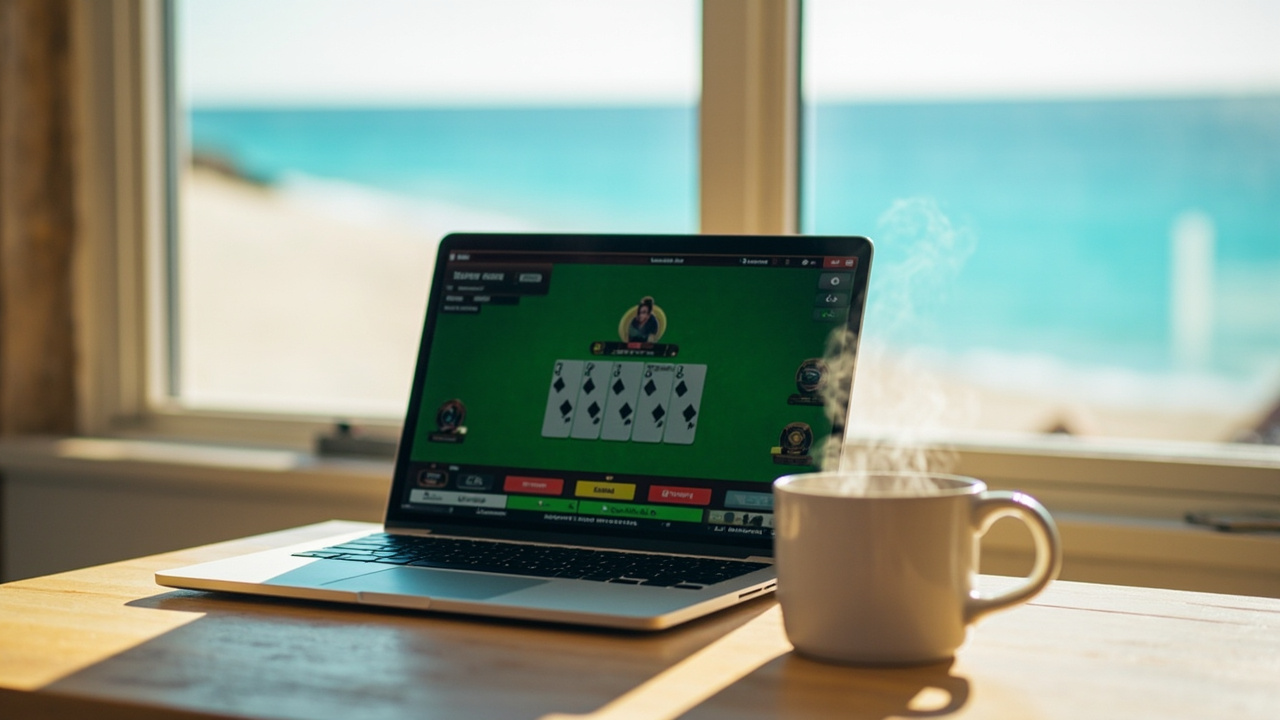

Live Casino Chat Etiquette: Reading the Table Without Losing the Room

There is a quiet superstition that crosses your legs at the table and you might just cross out your luck, but most seasoned players know the real friction at a live table comes from the chat window. When the cards are dealt by a real croupier and the stream runs through a local Geelong broadband node, the text feed becomes its own little ecosystem. I have spent seventeen years editing gambling copy and watching how players behave when the camera is on them, and the habit that separates a pleasant session from a flagged one is almost always the same: treat the chat like a shared space, not a broadcast tower.

Reading the Room Before You Type a Line

A live casino table is not a private booth, and the person running the shoe has a job that depends on keeping the pace steady for everyone in the stream. Good live casino chat etiquette starts with recognising that the croupier cannot pause the shoe to untangle a paragraph of complaints, and the same restraint applies when you are deciding whether to send a message at all. The best players I have watched over the years tend to reserve the chat for quick confirmations, a polite nod to a clean deal, or a short question that can be answered before the next hand starts. Anything longer than a sentence tends to stack up, and once three people are typing at once the whole table slows down, which is exactly the kind of delay that gets a streamer flagged for pacing problems.

I have edited enough iGaming copy to know that a rushed table is a bad table for the operator and a worse one for the player, so the first rule is simple: keep your messages short and your timing deliberate. If you want to ask about a payout or a rule on the felt, wait for a natural break rather than firing off a question in the middle of a round. The same courtesy applies when someone else in the chat has already asked the same thing, because doubling up on questions is one of the fastest ways to make the whole room feel noisy. A clean table runs on rhythm, and the chat is part of that rhythm, not a side conversation you can drop in whenever you like.

Detail Figures
Live tables Baccarat, blackjack, roulette, three card poker
Providers on stream Evolution, Playtech, local white-label feed
Currency and limits AUD, $10 min bet to $5,000 max, $2,000 daily withdrawal ceiling
Registration Email, phone, ID and proof of address, usually under ten minutes
Mobile Same live tables on mobile browser, no app required
Support Live chat and email, Geelong-based team during local hours
Loyalty Points per hand, tiered cashback, no deposit bonus tied to chat activity

When the Chat Actually Helps and When It Hurts

There are moments when the chat genuinely helps the table, and they are usually the moments when a player has a short, specific question that the croupier can answer without breaking the flow. A quick confirmation on whether a side bet pays before the next round starts is useful, and a polite note when the stream drops for a second is often the fastest way to get the floor team to check the connection. I have seen sessions run smoothly simply because one player kept their messages to two lines and let the dealer keep the shoe moving, which is the kind of restraint that pays off in a room where every second of delay is visible to everyone else.

The flip side is just as plain, and it is where most players who think they are being helpful end up making the table worse. Long explanations of your betting system, repeated questions about the same rule, or messages aimed at other players rather than the croupier all slow the pace and draw attention you probably do not want. Eliza Green, Product Analytics Lead at Banksia Betting Partners, puts it plainly: “Chat volume spikes are one of the clearest signals that a table is losing its rhythm, and the players who keep their messages short are usually the ones who stay in the game longest.” That is not a moral point so much as a practical one, because a table that runs cleanly is a table where the croupier can keep the pace and the floor team can spot genuine problems instead of sorting through noise.

There is also a narrower kind of play where the chat matters less than the maths on the felt, and video poker advantage play is the obvious example. That style of play relies on progressive jackpots and pay tables rather than table conversation, so the player who is tracking a progressive and comparing pay tables is usually better off reading the screen than filling the chat. The chat still has a role, but it is a supporting one, and treating it as the main event is a quick way to lose focus on the part of the table that actually pays.

Fortunately, resources exist to help players identify these lucrative opportunities without needing to engage with the dealer. Visiting https://bonusrocketplay.org/ can streamline the research process for those focused on the numbers. This allows the advantage player to keep their attention firmly on the screen where the real work is being done.

Deposits, Withdrawals and the Handpay Moment

The chat etiquette question does not end when the round finishes, because the same restraint applies when you are moving money in and out of the account. Deposits and withdrawals run through the cashier with their own flow, and the player who keeps the chat clean during a session is usually the same player who keeps the verification paperwork ready before they ever need a handpay. The cashier accepts AUD through the usual local methods, and the limits are set at $10 minimum to $5,000 maximum on the table side, with a $2,000 daily withdrawal ceiling that the floor team enforces before anything leaves the account. None of that is complicated, but it does mean the player who wants a clean payout is the one who has their ID, proof of address and payment details sorted before the session gets busy.

When a win crosses into the handpay range, the floor team verifies a handpay before delivering the winnings in person, and that is the moment where a tidy chat history can actually matter. A player who has been calm, brief and polite in the chat is easier to verify and easier to hand over the payout to than one who has spent the session arguing in the text feed. Jack Foster, Commercial Director at Eucalypt Digital Advisory, is blunt about the commercial side of that: “A clean cashier flow and a clean chat feed are not separate problems, because the same player behaviour that slows a table also slows a withdrawal.” Grace Foster, Risk and Integrity Manager at Banksia Betting Partners, adds the caveat that matters most for anyone chasing a payout: “Verification is not a hurdle you work around, it is the point where the operator confirms the player behind the account is the one who placed the bets.”

None of this is about being stiff for the sake of it, and it is certainly not about treating the chat like a compliance lecture. It is about recognising that a live table is a shared room, and the player who treats the text feed with the same care they would give a conversation in a busy Geelong pub on a Friday arvo is the one who gets the best out of the session. I have edited enough casino copy to know that the players who last are the ones who keep their messages short, their paperwork ready and their expectations grounded, because a clean table and a clean cashier are two sides of the same habit. If you remember that crossing your legs is only a superstition and that the real luck at the table comes from pacing yourself, you are already doing most of what live casino chat etiquette asks for.

Untitled

Scratch Cards Tips for Beginners: A Calm Look at Odds and Play Habits

Scratch cards tips for beginners usually start with the same honest admission: the fun sits in the quick pace, not in any promise of a regular pay day. For an Australian player picking up a ticket at a servo or loading a digital version on a phone, the smart move is to treat it like paid entertainment with a fixed budget, not a plan to cover the grocery run. The best habits are boring on purpose – fixed spend, clear stop points, and a read of the odds panel before any ticket is bought. When the game is understood first, the rest of the session feels less like guesswork and more like a choice you made on your own terms.

How Scratch Cards Actually Work

A scratch card is one of the simplest formats on the floor, but the simplicity hides a few things worth knowing before you hand over cash. Each ticket runs on a fixed pool of prizes spread across a printed run, and the published odds tell you how many winning tickets sit in that print run rather than how often you will personally strike one. That distinction matters because a card can advertise a top prize and still return most of its face value to the operator over time. I have seen country-level retail sets move the same way as a performance funnel: the front end looks bright and busy, but the real shape only shows up when you track what comes back after the initial rush. In regional Queensland, a local newsagent rack can sit quiet through the arvo and then turn busy after work, which is a decent reminder that foot traffic and ticket sales do not equal better luck for the person scratching at the counter. The practical read is straightforward – know the prize structure, accept that most tickets return nothing or a small win, and pick a card because you like the theme and the price point, not because the packaging looks busy.

What to check Why it matters Quick read
Published odds per card Shows how many winning tickets are in the print run Lower is not better; it is just the shape of the run
Price tier and prize spread Sets the cost and the range of possible returns Small wins are common; top prizes are rare by design
Remaining prizes, if shown Helps you see whether a run is still active Useful context, not a signal to chase
Return-to-player estimate, where available Gives a rough sense of long-term hold Treat it as a guide, not a personal forecast

Table: What to check on a scratch card before you play.

A few habits make the first few buys less messy. Keep the ticket stub until the session is over, check the terms on any smaller prize tier before you assume a win is instant cash, and do not confuse a loud top prize with a likely one. If you are comparing options, a plain card with a clear prize panel is usually easier to read than one that buries the detail in a pile of symbols and promises.

Budget, Timing, and the First Session

The first session is where most people either set a good pattern or learn the hard way that the pace is faster than they expected. A fixed amount decided before you start is the simplest control, and it works better than a vague intention to be careful once the tickets are already in your hand. I have managed country accounts where the spend ceiling was the one rule that kept a campaign from drifting, and the same logic applies here: a clear limit protects the session from turning into a long, tiring stretch that nobody asked for. A good first buy is small enough that a dry run does not sting, and short enough that you can stop without feeling like you left something unfinished. If you are playing after work on a weeknight, ten quiet minutes is often enough to get the feel of a card without letting the arvo slip away. The aim is not to optimise every ticket; it is to learn whether you enjoy the format at all, and at what cost.

Setting a strict limit upfront removes the need for willpower when the excitement peaks. You can find tools and guides to help manage this at https://skycr0wn-casino-login-au.com/. Sticking to these boundaries ensures the experience remains enjoyable without unexpected costs.

  • Decide the spend before you buy, and treat it as the price of the session rather than a target to recover.
  • Pick one card type first, so you are comparing like with like instead of jumping between price points.
  • Set a stop point in minutes as well as dollars, because the pace can quietly stretch a short session.
  • Keep any win in the same session only if it is small; larger wins deserve a pause, not an instant replay.
  • Put the ticket or receipt somewhere visible until you are done, so nothing gets scratched and forgotten.

List: A simple first-session checklist.

If the session ends with a small win or no win at all, that is a normal result, not a sign that you picked the wrong card. The useful question is whether the time and the spend felt acceptable while it was happening, because that is the part you can actually control next time.

Where Trust and Support Fit In

Trust is not the first word most people reach for with a scratch card, but it should be, because the format still runs through real operators, real systems, and real support paths when something goes wrong. The things worth checking are plain enough: who is running the product, how the prizes are verified, whether there is a clear route for a query, and what responsible-play tools exist if the pace starts to feel like too much. I have worked with operators where the support line was the difference between a small problem staying small and it growing into a proper headache, and that lesson holds for a player as much as it does for a country manager. If you are buying from a retail outlet, the retailer is the face of the transaction, but the back end still needs to be able to answer questions about a ticket, a prize claim, or a disputed result. If you are playing a digital version, the same expectation applies in a different form: clear account controls, readable terms, and a support path that does not disappear when you ask a direct question. One useful caveat comes from Sophie Ryan, Gaming Technology Consultant, Australian Gaming Futures, who notes that players should treat any prize claim or technical query as something worth documenting early, because the detail is easier to track when it is fresh rather than reconstructed later. That is a practical point, not a dramatic one, and it fits the format well.

The responsible-play side is worth its own quiet mention. A ticket can feel harmless because it is small and fast, which is exactly why it can keep going longer than intended. Account limits, time reminders, and a clear way to step back are the tools that matter, not because they are exciting, but because they make a stop easier when you want one. Privacy matters too: if you are playing online, look for a service that explains what it keeps, why it keeps it, and how you can ask questions about your own data without being sent in circles. None of this is glamorous, but it is the part that decides whether a session stays a pleasant bit of fun or turns into something you would rather not repeat.

Reading Odds Without Overthinking Them

Reading odds is less about maths confidence and more about knowing which numbers are telling you something useful and which ones are just part of the packaging. The main figure to look for is the overall odds of any win on a ticket, because that gives you a rough sense of how many tickets in the run pay something, however small. It does not tell you how often you will win, and it does not tell you what you will win, so it is a guide to the shape of the game rather than a personal forecast. A second useful detail is the prize spread: a card with several smaller prizes is a different experience from one that leans heavily on a rare top prize, even if both look similar on the rack. The pace of the game matters here too, because a card that pays small amounts more often can feel more engaging than one that sits quiet for a long stretch and then offers a big prize that most tickets will never reach. I have seen players confuse those two experiences and then wonder why one card feels more satisfying than another, when the difference was mostly in the prize structure rather than any hidden advantage.

A useful way to keep the numbers in perspective is to treat them as context, not as a reason to keep buying. If the odds panel says winning tickets are scarce, that is not a challenge to beat; it is a description of the run. If a card shows remaining-prize information where that is available, it can help you understand whether a run is still active, but it still does not change the basic point that each ticket is a separate scratch, not a step closer to a result. The steadier habit is to read the panel once, decide whether the price and the prize layout suit you, and then play within the limits you set at the start. That way the odds inform the choice without taking over the session.

A short verdict for anyone starting out: scratch cards are easiest to enjoy when you approach them as a fixed-cost bit of fun with a clear stop, not as a system to crack. The better beginner move is to pick a card you can read easily, set a small spend before you buy, and keep the session short enough that the pace never gets the upper hand. If the format suits you, you will know because the time and the cost felt acceptable while you were playing, not because a ticket handed you a lesson in hindsight. If it does not suit you, that is a fair outcome too, and no less useful for being simple.

1 … 3 4 5